
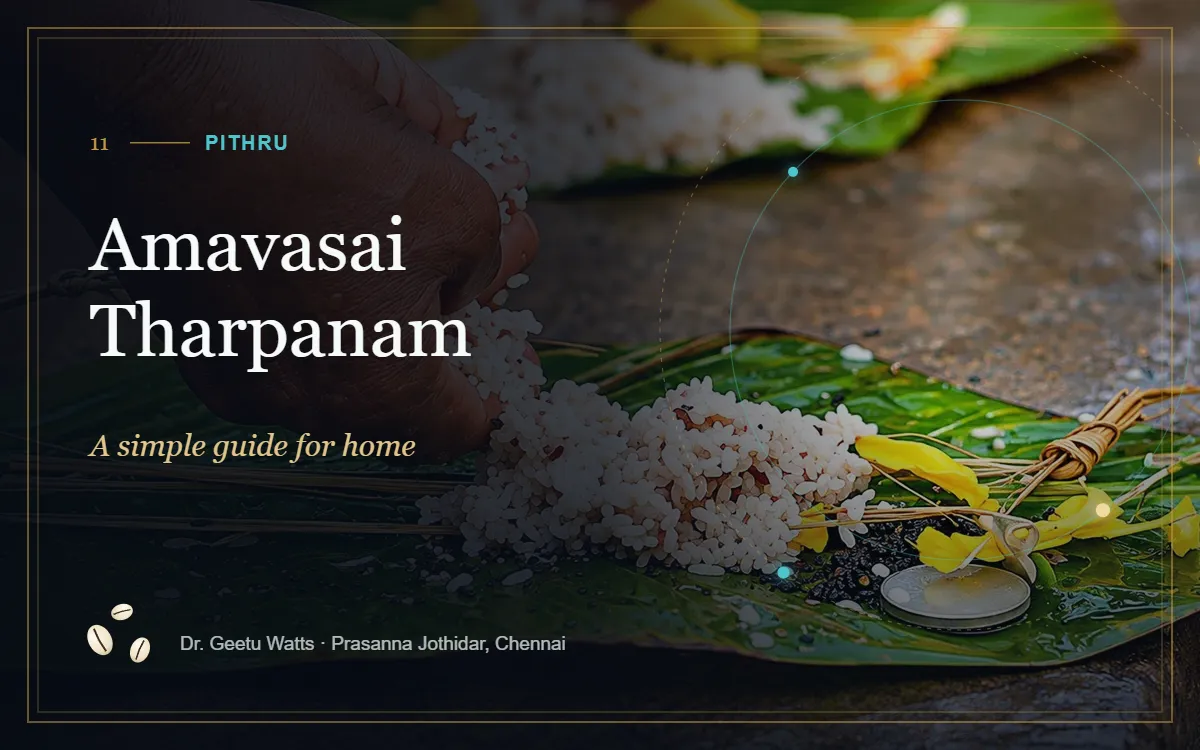
Amavasai tharpanam is the offering of water mixed with black sesame (ellu) to one's ancestors on the new-moon day, traditionally performed by men after a morning bath, facing south, with darbha grass. It is the simplest and most important remedy for Pithru Dosham. The three most important Amavasais are Thai, Aadi and Mahalaya Amavasai.
Why the new moon?
In tradition, the ancestors (pithrus) dwell in Pithru Loka, and the new-moon day — when the Sun and Moon are together — is the day the path between our world and theirs is considered most open. Offerings made on Amavasai are believed to reach them directly and satisfy them for the month. This is why Amavasai is the day of remembrance in Tamil homes: many families avoid celebrations, cook simple vegetarian food, offer food to crows and give to those in need.
Regular Amavasai tharpanam is the backbone of every Pithru Dosham Nivaranam. One elaborate ritual done once is far less powerful than simple offerings done faithfully, month after month.
Who should perform it
- Traditionally, sons whose father has passed away perform tharpanam for the paternal line (father, grandfather, great-grandfather) and the maternal line.
- Where there is no son, a grandson, brother's son or other male relative may perform it.
- Those whose father is living usually do not perform full tharpanam, but can do annadhanam, feed crows and pray for the ancestors.
- Women may not traditionally perform the water offering, but can and do perform every other part of ancestral remembrance — cooking the food, feeding crows and the needy, lighting the lamp and praying.
Customs vary by community; follow your family elders and priest where a tradition exists.
What you need
- Black sesame seeds (ellu)
- A few strands of darbha (kusa) grass — a ring (pavithram) for the ring finger
- A plate or vessel to receive the water
- A small vessel of clean water
- Raw rice (optional, in some traditions)
- A list of the ancestors' names and gothram
- A clean dhoti or simple clothing; the sacred thread if worn
Step-by-step method
- Bathe early and wear clean clothes. Do not eat before the tharpanam.
- Sit facing south — the direction of the ancestors.
- Wear the darbha pavithram on the right ring finger.
- Take a sankalpam — state the date, your name and gothram, and your intention to offer tharpanam to your ancestors.
- Move the sacred thread to the right shoulder (pracheenaveethi), if you wear one.
- Call the ancestors — name father, grandfather and great-grandfather, then mother, grandmother and great-grandmother, then the maternal side, as your tradition prescribes.
- Offer water with sesame — take a little sesame in the right palm, pour water over it and let it flow from the space between thumb and index finger (the pithru theertham) onto the plate, three times for each ancestor, saying "swadha namah tarpayami".
- Pray for their peace and blessings, and ask forgiveness for any lapse.
- Return the thread to the left shoulder and remove the pavithram.
- Pour the water at the base of a tree or in a clean place where it will not be stepped on.
A priest can guide you through the mantras the first few times; many families then continue on their own.
After the tharpanam
- Cook a simple vegetarian meal; offer a portion to crows (seen as messengers of the ancestors) before the family eats
- Give food, clothes or money to someone in need
- Feed a cow if possible
- Avoid onion, garlic and non-vegetarian food on Amavasai
- Light a lamp in the evening and remember the ancestors by name
The most important Amavasais
| Amavasai | Tamil month | Why it matters |
|---|---|---|
| Thai Amavasai | Thai (Jan–Feb) | Start of Uttarayanam; very auspicious for pithru rites, especially at Rameswaram and riverbanks |
| Aadi Amavasai | Aadi (Jul–Aug) | Start of Dakshinayanam; crowds gather at Rameswaram, Srirangam Amma Mandapam and the sea |
| Mahalaya Amavasai | Purattasi (Sep–Oct) | The culmination of Mahalaya Paksham — the year's most powerful day for ancestors; see our Mahalaya guide |
If you can do tharpanam only three times a year, choose these. If you can do it every month, even better.
Where to perform it
Tharpanam can be performed at home. On important Amavasais, many families go to a river, the sea or a temple tank: Rameswaram, Srirangam's Amma Mandapam on the Cauvery, Thiruvallur Veeraraghava Perumal temple tank, Kodumudi and Bhavani Kooduthurai in Kongu Nadu, or the beach at Chennai's Besant Nagar and Mylapore's Kapaleeswarar tank. The place matters less than sincerity and continuity.
Common mistakes
- Performing it after eating
- Facing east or north instead of south
- Using white sesame instead of black
- Doing it once with great effort and then stopping for years
- Doing it out of fear rather than gratitude
Feeding the crows: why it matters
In Tamil homes the crow (kaakam) is regarded as a messenger of the ancestors and the vahana of Saturn. On Amavasai and on the anniversary of a death, a portion of the cooked food — usually rice with sesame, dal and a vegetable — is placed outside before anyone in the family eats. If crows come quickly and eat, families take it as a sign that the ancestors are pleased. If they do not come, there is no need for alarm; simply pray and try again. Feeding crows daily for a period is also a common remedy suggested for Saturn-related and ancestral troubles.
Tharpanam, shraddham and Mahalaya — the difference
| Rite | When | What it involves |
|---|---|---|
| Amavasai tharpanam | Every new moon | Water and sesame offering to the lineage |
| Shraddham (thivasam) | Annually, on the tithi of death | A fuller rite for a specific parent or grandparent, usually with a priest, food offering and feeding of Brahmins or the needy |
| Mahalaya Paksham | 15 days before Mahalaya Amavasai | Offerings for all ancestors, including those whose death dates are unknown |
All three work together. If you can manage only one, the monthly Amavasai offering is the foundation.
If you cannot perform it yourself
Illness, travel, or the absence of a male member sometimes makes personal tharpanam impossible. In such cases a priest at a temple or riverbank can perform it on your behalf with your sankalpam, or a relative can do it for the family. What matters is that the remembrance happens. Annadhanam in the ancestors' name — feeding people on Amavasai — can be done by anyone, anywhere, and is itself a powerful offering.
Signs that the ancestors are at peace
- Peaceful dreams of ancestors, or dreams of them blessing the family
- Long-delayed family events — marriages, childbirth, property settlement — beginning to move
- A sense of calm in the home after Amavasai
- Crows coming readily to the food offered
Starting after a long gap
Many families come to tharpanam after years — sometimes decades — of not performing it. There is no need for guilt. Begin on the next Amavasai, ideally Thai, Aadi or Mahalaya, and include a prayer asking forgiveness for the gap. Some families perform a one-time rite at Rameswaram or Thilatharpanapuri to "close" the gap, then continue monthly at home. A consultation can tell you whether such a rite is needed for your family or whether simply resuming is enough.
A note for Chennai families
In Chennai, many families perform Amavasai tharpanam at the Kapaleeswarar temple tank in Mylapore, at Besant Nagar beach, or at the Thiruvallur Veeraraghava Perumal temple, about an hour from Mogappair. On Aadi and Thai Amavasai these places are crowded from early morning, so plan to arrive before sunrise.
தமிழில்: அமாவாசை தர்ப்பணம் செய்வது எப்படி?
அமாவாசை அன்று காலையில் குளித்து, எதுவும் சாப்பிடாமல், தெற்கு நோக்கி அமர்ந்து, வலது மோதிர விரலில் தர்ப்பை பவித்திரம் அணிந்து, கருப்பு எள்ளுடன் தண்ணீர் விட்டு முன்னோர்களுக்கு தர்ப்பணம் செய்ய வேண்டும். தந்தை, தாத்தா, கொள்ளுத்தாத்தா, தாய், பாட்டி, கொள்ளுப்பாட்டி — ஒவ்வொருவர் பெயரையும் சொல்லி மூன்று முறை "ஸ்வதா நம: தர்ப்பயாமி" என்று சொல்லி எள்ளும் தண்ணீரும் விடுங்கள்.
பின்னர் சைவ உணவு சமைத்து, முதலில் காகத்திற்கு வைத்து, ஏழைகளுக்கு அன்னதானம் செய்யுங்கள். பெண்கள் தண்ணீர் தர்ப்பணம் செய்யாவிட்டாலும், சமையல், காகத்திற்கு உணவு, அன்னதானம், விளக்கு ஏற்றி பிரார்த்தனை செய்யலாம்.
மிக முக்கியமான அமாவாசைகள்: தை அமாவாசை, ஆடி அமாவாசை, மஹாளய அமாவாசை. மாதம் தோறும் செய்ய முடியாவிட்டாலும், இந்த மூன்றையும் தவறாமல் செய்யுங்கள்.
Frequently asked questions
Can I do Amavasai tharpanam if my father is alive?
Traditionally full tharpanam is done after the father has passed. Others can feed crows, give annadhanam and pray for the ancestors.
What if I don't know my ancestors' names?
Offer to "all ancestors of my lineage" with sincerity; name those you know. A priest can guide the mantra.
Can NRIs perform tharpanam abroad?
Yes — the method is the same: face south, use black sesame and water, and pour the water at the base of a tree or plant.
தர்ப்பணம் எந்த நேரத்தில் செய்ய வேண்டும்?
அமாவாசை திதி உள்ள நாளில் காலை, மதியத்திற்கு முன், சாப்பிடுவதற்கு முன் செய்வது சிறந்தது.