
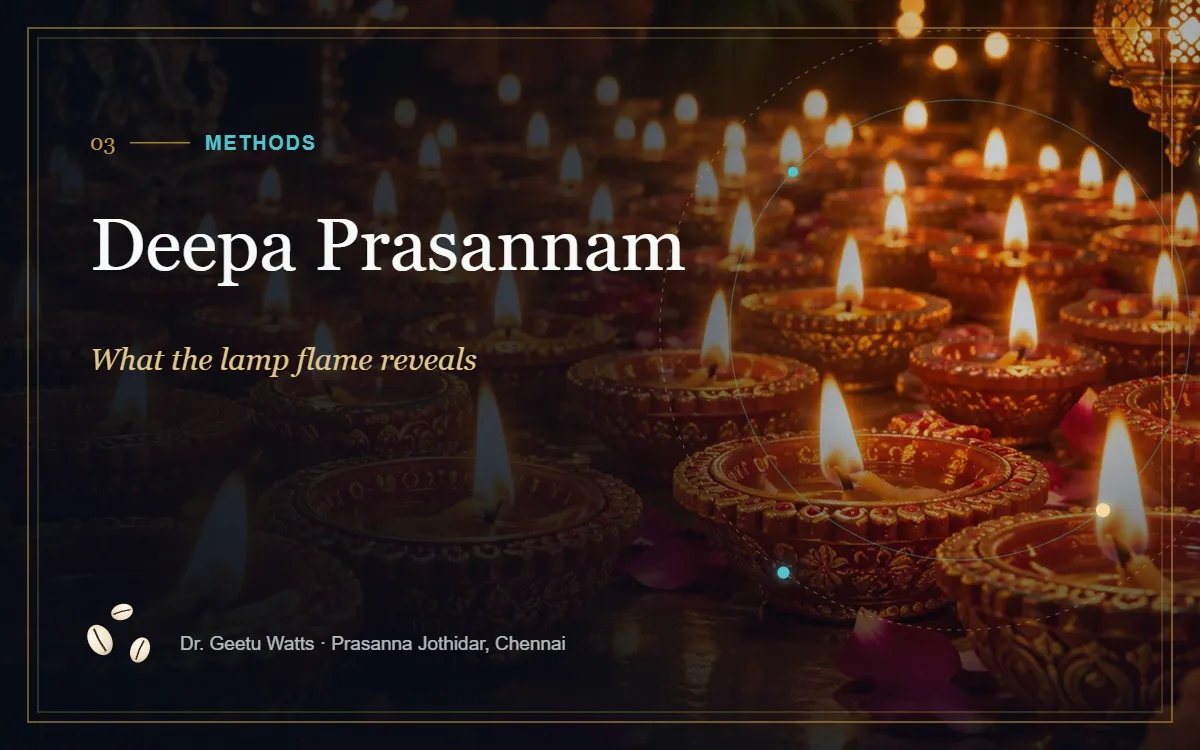
Deepa Prasannam is a Prasanna Jothidam method in which a lamp is lit at the moment of the question and its flame is read — colour, height, steadiness, the direction it leans, sparks and sound — together with the planetary chart of that moment. It is especially used for questions about the whole family, its deity and its ancestors.
Agni as witness
In Vedic tradition, Agni carries offerings to the gods and witnesses every vow — marriages are solemnised around the sacred fire for this reason. A lamp lit with prayer is therefore seen as a direct channel between the household and the divine: how it burns reflects the state of the question. Deepa Prasannam has been practised since Vedic times and remains part of the Deva Prasnam conducted in Kerala and Tamil Nadu temples before festivals, renovations, or when unexplained troubles arise.
In a home lamp, too, Tamil families instinctively read signs — a lamp that will not light, a wick that sputters, a flame that suddenly flares. Deepa Prasannam formalises this intuition into a disciplined reading.
How the session works
- The lamp — usually a brass or clay deepam with ghee or sesame oil and a cotton wick — is prepared and lit with prayer.
- The question is asked and the time noted; a planetary chart is cast for that moment.
- The Jothidar watches the flame throughout the session, not just at the start, noting how it changes as different aspects of the question are discussed.
- The flame signs are combined with the chart and, where available, the family's horoscopes.
- The session ends with clear guidance and a simple parihara.
Reading the flame
| What is seen | Traditional meaning |
|---|---|
| Bright, steady, rising flame | Auspicious; blessings are present |
| Golden or saffron colour | Divine grace, good outcome |
| Flickering without wind | Disturbance or unrest in the family |
| Smoky, dim or reddish flame | Obstacles, neglected worship or ancestral displeasure |
| Flame leaning in a direction | Points to the direction of the cause, the temple or the deity |
| Sparks or crackling sounds | Sudden events; needs careful reading |
| Flame going out | Strong obstacle — the question is re-examined with care |
No single sign is read alone. A leaning flame means one thing when the chart points to the 4th house (home) and another when it points to the 9th (ancestors).
Questions suited to Deepa Prasannam
- Is our Kula Deivam satisfied? Which direction, what kind of temple?
- Do the ancestors need attention — is there Pithru Dosham?
- Why did trouble begin after moving into this house? Is there a Vasthu or energy issue?
- Many members of the family face problems at once — what is the common cause?
- Is the remedy we are planning the right one, and when should it be done?
Deepa vs Thamboola Prasannam
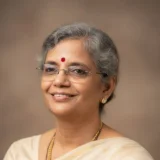
Thamboola Prasannam reads betel leaves offered by the seeker and suits a sharp personal question — a missing person, a court case, marriage timing. Deepa Prasannam reads a flame and suits questions concerning the household as a whole. Dr. Geetu Watts chooses between them, or uses both, according to what you bring. Sozhi Prasannam with cowrie shells may be used to confirm the result.
Keeping the lamp at home
Many remedies after a Deepa Prasannam involve lighting a lamp at home in a specific way: facing east or north, with sesame oil or ghee, at sunrise or twilight (sandhya), on particular weekdays. A few practical tips:
- Keep the lamp clean; remove old wick residue before relighting.
- Use two wicks twisted together where advised — a common Tamil practice.
- Never blow out a lamp; let it go out naturally or close it with a flower.
- Light it at the same time daily during the remedy period.
Why it is used for families
Problems in families rarely have a single cause. A son's job trouble, a daughter's delayed marriage and a parent's illness may all trace back to one neglected factor — the family deity, an unfulfilled vow, or the ancestors. Deepa Prasannam looks at the household as a single unit, which is why Dr. Geetu Watts uses it when the question concerns more than one person.
A short history of the method
References to reading the flame appear in the same body of Kerala Jyotisha literature that produced Prasna Marga. Temple astrologers — the families who were traditionally called upon when a temple faced misfortune — would light the deepam in front of the sanctum and watch it through the entire Deva Prasnam, sometimes for hours, before giving their conclusions to the temple trustees. The same discipline was carried into households: when a family faced a run of misfortune, the elders would call a Jothidar to perform a prasannam with the lamp lit in the pooja room. Many of the guidelines families still follow at home — lighting the lamp at twilight, facing east, never blowing it out — come from this tradition.
Dr. Geetu Watts learned Deepa Prasannam as part of her seven-year gurukulam under Guru Kalidasa Namboodiri, alongside Thamboola and Sozhi Prasannam. Of the many forms of prasannam, these are the three she chose to specialise in.
What the reading cannot do
It is important to be honest about limits. Deepa Prasannam is spiritual guidance, not a medical test, a legal opinion or a financial plan. If the flame indicates a health concern, the advice will always include seeing a doctor; if it indicates a property dispute, the advice will include sound legal help. Remedies support action in the world — they do not replace it. A Jothidar who tells you to stop medicine or avoid professional help is not following the tradition.
Equally, one unusual flicker at home on a windy evening is not a sign of doom. Patterns matter, not single moments, and they are always read together with the chart.
Preparing for a Deepa Prasannam
- Come after a bath, with a calm mind, and if possible avoid non-vegetarian food that day.
- Bring the horoscopes of all family members you have, even if they seem unrelated to the question.
- Note down recent events: when the trouble began, any house move, any death in the family, any vow that was made and not completed.
- If more than one family member can attend, bring them — Deepa Prasannam is a family reading.
- Keep 60–90 minutes free; the flame is watched throughout the session, so it should not be rushed.
Remedies commonly suggested after a Deepa Prasannam
Because the method focuses on the household, remedies are usually family-level rather than individual. Common examples include resuming Kula Deivam worship; a series of Amavasai offerings for the ancestors (see our Amavasai tharpanam guide); lighting a specific lamp at home for 48 days; feeding the needy in the name of the family; and a visit to a particular temple on a particular day. Where the home itself seems to be the issue, simple Vasthu corrections may be suggested. Each remedy is explained so that the whole family understands why it is being done.
தமிழில்: தீப பிரசன்னம்
தீப பிரசன்னத்தில், கேள்வி கேட்கும் நேரத்தில் ஒரு விளக்கு ஏற்றப்படுகிறது. அதன் சுடரின் நிறம், உயரம், நிலைத்தன்மை, எந்த பக்கம் சாய்கிறது, பொறி அல்லது சத்தம் — இவை அனைத்தும் அந்த நேரத்தின் கிரக நிலையுடன் சேர்த்து பார்க்கப்படுகின்றன.
பிரகாசமான, நிலையான, மேல்நோக்கி எரியும் சுடர் நல்ல அறிகுறி. காற்று இல்லாமல் ஆடும் சுடர் குடும்பத்தில் குழப்பத்தையும், புகையுடன் மங்கலாக எரியும் சுடர் தடைகள், குலதெய்வ வழிபாடு விடுபட்டது அல்லது பித்ரு அதிருப்தியையும் குறிக்கலாம். சுடர் சாயும் திசை, காரணம் அல்லது கோவில் இருக்கும் திசையை காட்டும்.
குடும்பம் முழுவதும் பிரச்சனைகள், குலதெய்வம், முன்னோர், புதிய வீட்டில் வந்த சிக்கல்கள் — இவற்றுக்கு தீப பிரசன்னம் மிகவும் சிறந்தது.
Frequently asked questions
Is ghee or oil used for Deepa Prasannam?
Either may be used according to tradition; the Jothidar prepares the lamp.
Can Deepa Prasannam be done at my home?
It is usually done at the consultation, but home and temple prasannams can be discussed.
How long does it take?
Typically 45 to 60 minutes.
வீட்டு விளக்கு அடிக்கடி அணைந்தால் என்ன அர்த்தம்?
காற்று, எண்ணெய், திரி போன்ற காரணங்களை முதலில் சரிபாருங்கள். தொடர்ந்து நடந்தால், ஒரு பிரசன்னம் மூலம் காரணத்தை அறியலாம் — பயம் தேவையில்லை.