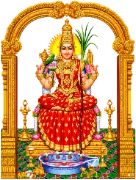

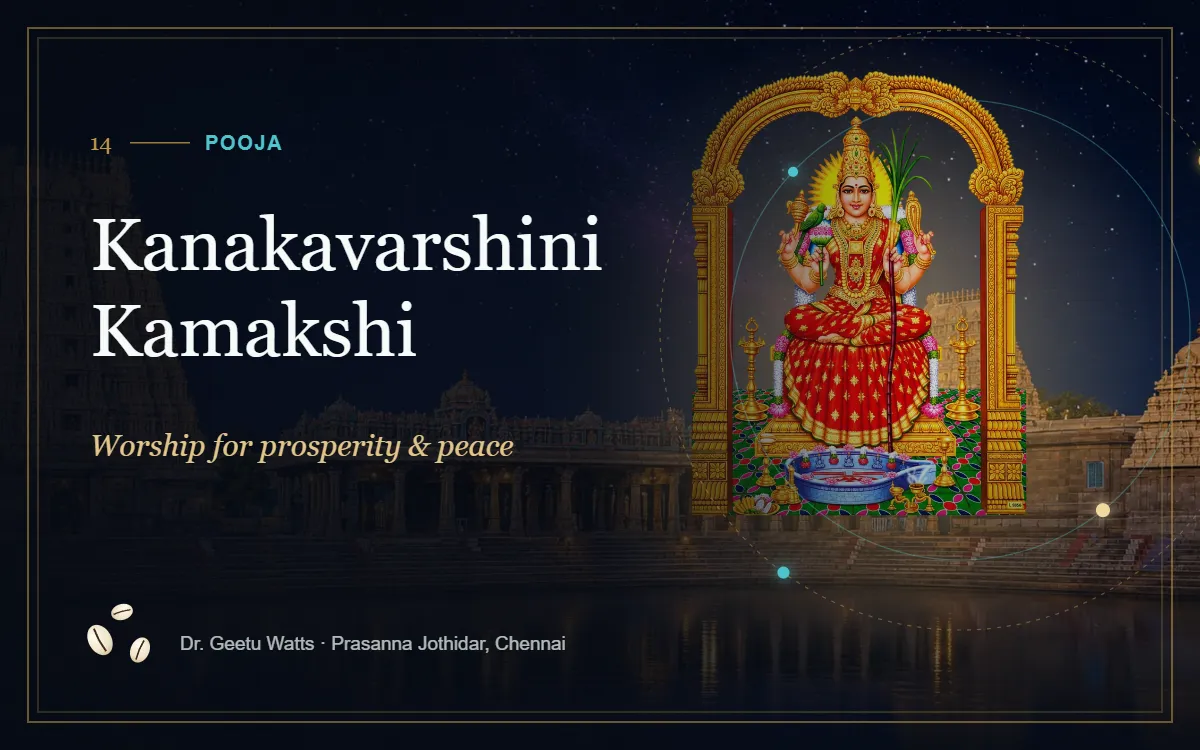
Kanakavarshini Kamakshi is a form of Goddess Kamakshi of Kanchipuram worshipped as the one who showers gold (kanaka varsha) — prosperity, abundance and family welfare. Dr. Geetu Watts, a Kamakshi upasaki, often guides families to her worship: a ghee lamp, red flowers, kumkum archanai and Kamakshi slokas on Fridays, sustained over a set period, alongside Kula Deivam worship.
Who is Kamakshi?
Sri Kamakshi of Kanchipuram is one of the most revered forms of the Divine Mother in South India and the presiding deity of one of the Shakti Peethas. Her name is often explained as "she whose eyes (akshi) grant desires (kama)". Seated in padmasana, holding sugarcane bow, flower arrows, noose and goad, she embodies both compassion and power. Adi Shankaracharya's association with Kanchi and the Kamakoti Peetham has made her worship central to the spiritual life of Tamil Nadu.
Dr. Geetu Watts is a Kamakshi upasaki — a devotee who has dedicated her practice to the Goddess. The Kamakshi image at the heart of this website reflects that devotion, and many of the remedies she suggests lead back to Kamakshi.
The Kanakavarshini form
Kanaka means gold; varshini, one who showers. Kanakavarshini Kamakshi is the Goddess as the giver of abundance — not only money, but every kind of fullness: a secure livelihood, a peaceful home, children's progress, health and harmony. The form recalls the famous episode in which Adi Shankara's Kanakadhara Stotram moved the Goddess to shower golden amla fruits on a poor woman's home — the archetype of grace answering sincere need.
When families are guided to this worship
- Income is steady but savings never grow
- Unemployment or job insecurity in the family
- Transfers, promotions or government jobs long delayed
- A new home, shop or business is being started
- Family peace is disturbed by financial stress
- As a thanksgiving after a difficulty has passed
Two families who wrote to Dr. Geetu Watts describe exactly these outcomes: one from Pudukkottai, whose husband obtained a government teaching post within a year of Kanakavarshini Kamakshi worship, and one from Hosur, who received a transfer close to home along with other family milestones. Their letters are on our reviews page.
How to perform the pooja at home
- Day and time: Fridays are ideal; Pournami and Navaratri days are especially powerful. Morning after bath, or at twilight.
- Preparation: clean the pooja space; place a picture of Kamakshi or Kanakavarshini Kamakshi facing east or west.
- Lamp: light a ghee lamp with two wicks.
- Offerings: red flowers (hibiscus, red roses, arali), kumkum, turmeric, betel leaves with areca nut, fruits and a simple sweet such as sakkarai pongal or payasam.
- Archanai: offer kumkum while reciting the Goddess's names — the Lalitha Sahasranamam, the Kamakshi Ashtottaram, or simply "Om Sri Kamakshyai Namaha" 108 times.
- Slokas: the Kanakadhara Stotram and Mooka Panchashati verses are traditional.
- Prayer: state your need simply and sincerely.
- Close: show the lamp (aarti), offer the naivedyam, and share the prasadam with family.
How long to continue
Families are usually advised to continue for a fixed period — 11, 21 or 48 Fridays, or one full year — without breaking the sequence. If a Friday is missed due to travel or illness, simply continue the next week. Many families continue the worship permanently after their prayer is answered, as gratitude.
Visiting Kanchipuram
If possible, visit the Kamakshi Amman Temple in Kanchipuram at the start or end of your worship period — on a Friday, Pournami or during Navaratri. Kanchipuram is about 75 km from our Mogappair office; see our Kanchipuram page. Offer a saree, kumkum and lotus flowers to the Goddess, and pray for your family.
Kamakshi worship with Lakshmi and Kubera
For prosperity, Kamakshi worship is often paired with Shodasa Lakshmi Pooja and Gubera Sampath. Kamakshi grants the grace; Lakshmi brings wealth; Kubera protects it. When debt is part of the picture, Runa Vimochanam remedies on Tuesdays are added.
The Kanakadhara story
The young Adi Shankara, on his rounds for alms, stopped at the hut of a poor Brahmin woman. She had nothing to give but a single dried amla fruit, which she offered with deep humility. Moved by her generosity in poverty, Shankara composed the Kanakadhara Stotram — twenty-one verses praising Mahalakshmi — and, the story says, the Goddess responded by showering golden amla fruits on the house. Tradition sees in this story the essence of Kanakavarshini worship: sincere devotion and generous giving, even from little, invite abundance. Families who perform this pooja are encouraged to give something — food, a small donation, help to someone in need — every Friday along with their worship.
Kamakshi worship for specific needs
| Need | Emphasis in worship |
|---|---|
| Employment and government jobs | Friday worship with the Kanakadhara Stotram; prayer at Kanchi before applications and interviews |
| Marriage | Friday ghee lamp, kumkum archanai and offering thamboolam to married women |
| Children | Kamakshi worship together with Kula Deivam prayers; Navaratri observance |
| Family peace | Evening lamp and Lalitha Sahasranamam recited as a family |
| Business | Worship at the start of the financial year and before major contracts |
Navaratri: the most powerful time
During Navaratri, the nine nights of the Goddess, Kamakshi worship becomes especially powerful. Many Tamil homes arrange a kolu, invite girls and married women for thamboolam, and recite the Lalitha Sahasranamam each evening. Navaratri begins immediately after Mahalaya Amavasai — the ancestors are honoured first, and then the Goddess is welcomed. Families with Stree Sabam find Navaratri an ideal time for remedies centred on honouring women.
Common questions about the picture and space
- Use a clean, framed picture of Kamakshi or Kanakavarshini Kamakshi; a small idol is fine if your family already worships one.
- Keep the pooja space clean and uncluttered; north-east is ideal (see Vasthu for apartments).
- Offer fresh flowers each time; remove the previous day's flowers.
- If you live in a small flat, a shelf in the north-east corner of the living room works well.
Why sincerity matters more than scale
A simple lamp lit faithfully every Friday for a year is worth more than a single grand pooja done once. The Goddess responds to devotion, not expense. Dr. Geetu Watts always encourages families to keep the worship within their means and to do it themselves, with understanding, rather than outsourcing it or turning it into an anxious obligation.
For families abroad
Kamakshi worship travels well. Families in Singapore, the UAE, the UK, the USA and Australia perform the Friday pooja at home and visit a local Amman temple when possible, saving a Kanchipuram visit for their next trip to India. See our guide for NRIs.
தமிழில்: கனகவர்ஷிணி காமாட்சி வழிபாடு
"கனகம்" என்றால் தங்கம், "வர்ஷிணி" என்றால் பொழிபவள். கனகவர்ஷிணி காமாட்சி, செல்வம், வேலை, குடும்ப அமைதி, குழந்தைகளின் முன்னேற்றம் என அனைத்து வளங்களையும் அருளும் காஞ்சி காமாட்சியின் வடிவம். டாக்டர் கீது வாட்ஸ் ஒரு காமாட்சி உபாசகி.
வீட்டில் வழிபடும் முறை: வெள்ளிக்கிழமை காலை அல்லது மாலை, காமாட்சி படத்தின் முன் இரண்டு திரி நெய் விளக்கு ஏற்றி, சிவப்பு மலர்கள், குங்குமம், மஞ்சள், வெற்றிலை பாக்கு, பழம், சர்க்கரை பொங்கல் வைத்து, "ஓம் ஸ்ரீ காமாக்ஷ்யை நம:" என்று 108 முறை குங்கும அர்ச்சனை செய்யுங்கள். கனகதாரா ஸ்தோத்திரம் சொல்லலாம்.
11, 21 அல்லது 48 வெள்ளிக்கிழமைகள் தொடர்ந்து செய்யுங்கள். முடிந்தால் காஞ்சிபுரம் காமாட்சி அம்மன் கோவிலுக்கு சென்று புடவை, குங்குமம், தாமரை மலர் சமர்ப்பியுங்கள்.
Frequently asked questions
Can anyone perform Kanakavarshini Kamakshi pooja?
Yes — men and women, married or unmarried, can perform it at home with devotion.
Is a priest required?
No. The home pooja described here can be done by the family. A priest may be engaged for special occasions.
Can it be done during menstruation?
Follow your family custom; many women pause the pooja during those days and resume afterwards.
காமாட்சி படம் எந்த திசையில் வைக்க வேண்டும்?
கிழக்கு அல்லது மேற்கு நோக்கி வைப்பது வழக்கம்; வழிபடுபவர் கிழக்கு அல்லது வடக்கு நோக்கி அமரலாம்.
How soon will I see results?
Many families describe changes within a few months of steady Friday worship, but the Goddess's timing cannot be fixed. Continue with patience and gratitude.